


Master Furnace Troubleshooting Today
Troubleshooting a furnace means systematically identifying why your heating system is underperforming, isolating the faulty component, and applying safe, practical fixes that can restore heat or indicate when professional help is required. This guide helps homeowners diagnose common furnace problems—like no heat, cold air, unusual noises, and frequent cycling—so you can make informed DIY checks and avoid unsafe actions. You will learn clear troubleshooting steps for thermostats, filters, ignition components, electrical issues, and airflow parts, plus when to stop and call a technician for safety-critical issues such as gas smells or suspected heat exchanger damage. The article walks through diagnostic checklists, how-to steps for basic fixes, maintenance strategies that prevent most emergency calls, and criteria for urgent professional service. Read on for concise how-to numbered steps, preventative maintenance checklists, comparison tables that map symptoms to immediate actions, and local service options available in and surrounding cities.
Why Is My Furnace Not Heating? Common Causes and Solutions
A furnace can run without producing warm air for several reasons, typically falling into airflow problems, control or ignition failures, or fuel/electrical supply issues; diagnosing the category quickly narrows the likely fixes. Airflow issues like a dirty furnace filter or blocked vents restrict heat delivery even while the furnace cycles normally, while control faults such as a misprogrammed thermostat or a failed gas valve prevent burners from igniting. Identifying the mechanism—restricted airflow, failed ignition, or supply interruption—lets you choose immediate safe actions that often restore heat or indicate a need for professional inspection.
Common causes that produce a running furnace but no heat:
- Dirty or clogged air filter: Restricted airflow causes the furnace to overwork and reduces heat output.
- Thermostat set incorrectly or malfunctioning: Incorrect mode or thermostat failure prevents heat call.
- Pilot light or ignitor failure: No ignition means no combustion and therefore no warm air.
- Blocked supply vents or closed dampers: Obstructed distribution prevents heated air from reaching rooms.
- Faulty gas valve or fuel supply interruption: Without fuel flow heaters cannot generate heat.
These causes point to different repair levels, and the next paragraphs explain how to check simple items safely before moving to ignition and supply checks.
What Are the Signs of a Furnace Not Heating Properly?
Common, observable signs that a furnace is not heating properly include cold or lukewarm air from supply vents, uneven temperatures across rooms, the system running long cycles without raising temperature, and visible error codes on modern furnaces or thermostats. You can confirm reduced output by feeling several supply vents during a heating cycle and comparing their temperatures; large discrepancies often indicate duct or distribution issues rather than burner failure. Thermostat readouts that show a satisfied call but low supply temperature suggest airflow or combustion problems, whereas a thermostat that never reaches setpoint despite warm vents can indicate insulation or distribution loss. Recognizing these signs allows you to target your next steps: check filters and vents first, then move to thermostat and ignition checks if simple fixes don’t restore normal heat.
How Can I Fix a Dirty Furnace Filter to Restore Heat?
Inspecting and replacing a dirty furnace filter is one of the simplest, highest-impact homeowner actions to restore heat and improve efficiency. First, turn off the furnace power, locate the filter slot (typically at the return air grille or inside the blower compartment), remove the filter, and inspect for accumulated dust or debris; a visibly darkened or compacted filter needs replacement. Replace with the correct size and an appropriate —trade-offs exist: higher MERV offers better filtration but can restrict airflow if the system isn’t designed for it—so choose a MERV rating recommended for residential systems and replace filters every 1–3 months depending on use and indoor air quality. After replacing the filter, restart the system and note improved airflow and shorter run times; persistent airflow restriction after a fresh filter suggests blower or duct issues requiring professional diagnosis.
This comparison helps map common causes to quick homeowner actions for immediate troubleshooting.
| Cause | Symptom | Immediate Safe Action |
|---|---|---|
| Dirty air filter | Weak airflow, long cycles | Turn off power, replace filter with correct size and MERV rating |
| Thermostat error | No heat call, wrong mode | Check mode/batteries, reset thermostat, verify schedule |
| Ignitor/pilot failure | Furnace runs but no flame | Confirm power/thermostat, do not attempt gas repairs; call pro if ignition fails |
| Blocked vents/closed dampers | Cold rooms despite running | Open vents, remove obstructions, check register airflow |
| Tripped safety limit | Furnace cycles frequently | Replace filter, reset power; if recurring, schedule inspection |
This table clarifies which quick actions homeowners can take safely and which issues point to professional service.
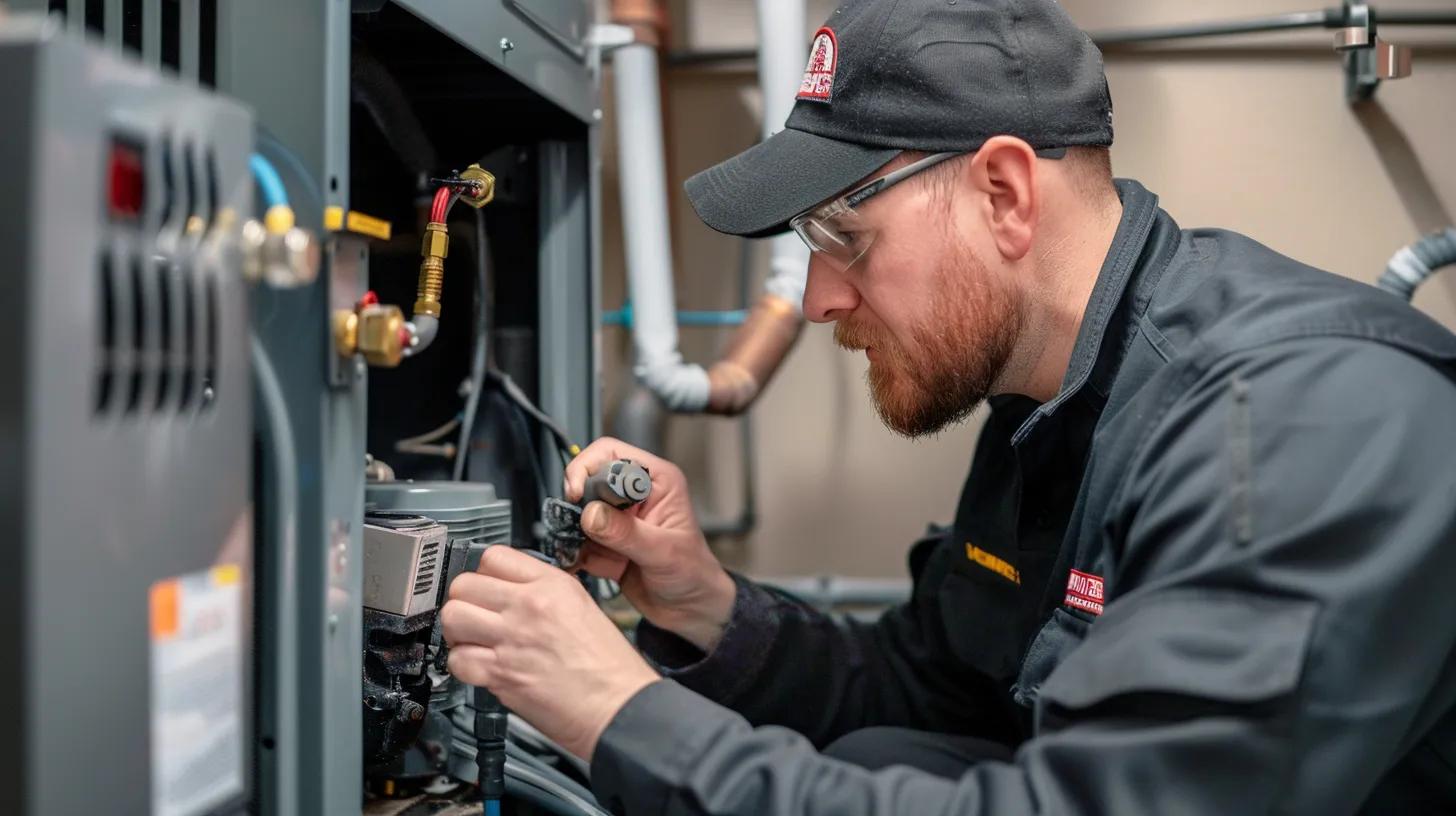
After trying the safe DIY steps above—filter replacement, vent clearing, thermostat checks—consider professional diagnosis if the furnace still produces no heat. Air Express Heating & Air Conditioning provides furnace services and can assess ignition, gas valve, or blower motor issues when DIY checks are exhausted. Their service messaging emphasizes fast, courteous, and honest technicians, clear explanations of the problem and options, and free estimates for needed repairs. If you prefer a technician to handle the diagnosis or filter replacement, scheduling professional assistance ensures safe, thorough resolution without guesswork.
How Do I Troubleshoot a Furnace That Won’t Turn On?
When a furnace won’t turn on at all the issue often involves the control circuit, power supply, thermostat signal, or safety interlocks; isolating these layers narrows the cause and suggests safe tests you can perform. Begin with the thermostat: confirm it is in heat mode and raising the target temperature to call for heat, because many “no start” problems are simple user-configuration issues. Next, check the furnace power switch and the home’s breaker panel for tripped breakers; a tripped breaker or a furnace switch left in the off position interrupts the control power and prevents startup. If power and thermostat are correct but the furnace still fails to initiate ignition, safety devices like a limit switch or the condensate overflow switch on high-efficiency furnaces could be preventing startup and will usually require a technician to inspect and reset safely.
Follow this numbered checklist to safely troubleshoot a no-start situation:
- Confirm thermostat mode and target temperature: Set to “Heat” and raise the temperature several degrees to trigger a call.
- Replace thermostat batteries and reset smart thermostats: Low batteries or communication issues can prevent a heat call.
- Check the furnace power switch and circuit breaker: Look for tripped breakers and switch the furnace power ON if it’s off.
- Inspect visible furnace switches and door safety interlocks: Ensure access panels are fully seated; many furnaces won’t start with open doors.
What Steps Should I Take to Check the Thermostat and Power Supply?
Start thermostat checks with the simplest actions: confirm the thermostat mode is set to Heat, raise the setpoint to force a call, and replace batteries if the display is dim or unresponsive. For smart , verify Wi-Fi and power status; a lost connection or power-stealing wiring issues can prevent proper operation, and resetting the device often restores function. Next, inspect the furnace power switch (usually near the unit) and the breaker panel for a tripped breaker labeled for the furnace; reset a tripped breaker once and monitor whether it trips again, which indicates an electrical fault. If thermostat wiring appears loose or the thermostat never issues a call after batteries and settings are verified, contact a technician since wiring or control board issues require trained diagnosis.
How Do I Reset a Tripped Circuit Breaker or Gas Valve?
Resetting a tripped circuit breaker is straightforward but must be done carefully: locate the home’s breaker panel, find the breaker controlling the furnace (often labeled), switch it fully to OFF, then back to ON; if it trips again immediately, leave it off and call a professional electrician or HVAC technician. Do not repeatedly flip a breaker that immediately re-trips, as this can indicate a short or motor fault. For gas valves, perform only a visual position check—ensure nothing is visibly loose and that supply lines are intact—but do NOT attempt to operate or repair gas components yourself. If you smell gas, evacuate the house, call emergency services, and contact an ; safety is paramount for any suspected gas leak.
What Causes a Furnace to Blow Cold Air and How Can I Fix It?
A furnace that blows cold air may be running but failing to ignite, or it may be circulating unheated air because the burners are not producing heat; diagnosing whether the issue is generation (ignition) or distribution (airflow) is the first step. Ignition-related causes include a faulty pilot light, failed ignitor, or flame sensor problems that cause the control board to shut burners down; distribution causes include closed vents, huge duct leaks, or a recently replaced high-MERV filter restricting heat transfer. A short diagnostic sequence—verify thermostat call, inspect vents, confirm ignition (sight or via furnace indicators), and listen for ignition clicks—will reveal whether the furnace is attempting to light. Simple fixes for cold-air issues include thermostat corrections, fresh filters, and clearing vents, while ignition component replacement or flame-sensor cleaning generally requires a technician.
Common immediate fixes homeowners can attempt:
- Confirm thermostat is in heat mode and raising temperature.
- Replace or clean the air filter to restore airflow.
- Clear registers and ensure dampers are open for proper distribution.
If ignition failure is suspected because you hear clicking without flame or no click at all, schedule professional service for safe inspection and replacement of ignitors or gas valves.
How Does a Faulty Pilot Light or Ignitor Affect Furnace Heating?
A pilot light or electronic ignitor is the component that initiates combustion; if it’s faulty the burners will not light and the furnace will circulate cold air while the blower runs. Signs of pilot/ignitor issues include repeated clicking without flame, intermittent ignition, or no ignition sound at all despite power and a thermostat call. Some older pilot-light systems allow homeowner relighting if manufacturer instructions permit, but on modern furnaces with electronic ignitors you should not attempt internal repairs—ignitor replacement involves handling fragile ceramics and electrical components best left to technicians. When ignition failure is confirmed, arrange for professional inspection to replace the ignitor and test related safety switches to ensure reliable, safe operation.
When Should I Replace or Clean the Flame Sensor?
The flame sensor confirms that burners are lit; a dirty or failing sensor often causes the burners to shut down shortly after ignition, producing cycles of briefly warm then cold air. Symptoms include the furnace igniting then shutting off repeatedly, accompanied by error codes or blinking LED sequences on the furnace control board. Cleaning a flame sensor can sometimes be performed by a knowledgeable homeowner by accessing the sensor, gently cleaning any film with fine steel wool, and re-seating it—however, improper handling can damage the sensor or affect safety circuits. If cleaning does not resolve the issue, or if you are uncomfortable disassembling components, call a technician to inspect and replace the sensor to restore reliable combustion.
Why Is My Furnace Making Strange Noises? Identifying and Resolving Unusual Sounds
Furnace noises range from benign operational sounds to warnings of failing components; mapping sound types to likely causes helps prioritize safe diagnostic steps and prevent escalation. Rattling or loose metal sounds often point to ductwork or loose fasteners, while squealing or grinding suggests motor or belt wear in the blower assembly. A loud boom during ignition can indicate delayed combustion caused by dirty burners or a plugged gas orifice, while high-risk noises—like a pronounced cracking or popping near the heat exchanger—demand immediate attention because they can indicate structural damage with carbon monoxide implications. Listening closely to when the sound occurs (startup, during firing, or constant airflow) and noting accompanying symptoms guides whether to clear vents and filters or to shut down the system and call for professional service.
Below are structured checks and safe first steps to diagnose common noise sources.
- Rattling: Check duct fasteners and loose panels; tighten screws and inspect registers.
- Squealing or grinding: Suspect blower motor bearings or belts; power down and schedule motor inspection.
- Boom or backfire: Likely delayed ignition—turn off system and arrange professional burner cleaning.
- Cracking near combustion chamber: Stop using the furnace and seek immediate professional evaluation.
These steps separate homeowner-safe maintenance from urgent conditions that require immediate technician response.
What Do Blower Motor and Ductwork Noises Indicate?
Blower motor noises—squeals, screeches, or grinding—typically indicate worn bearings, a loose belt, or debris in the blower wheel, all of which reduce airflow and can overheat the motor if unaddressed. Ductwork noises such as rattling, whistling, or popping often result from loose duct connections, collapsing flexible ducts, or temperature-related expansion and contraction of metal ducts; these reduce comfort and efficiency. Start troubleshooting by checking and replacing the filter, tightening accessible duct joints, and clearing register obstructions; if motor sounds persist or motor temperature rises, schedule professional motor service for lubrication, belt replacement, or blower wheel cleaning. Properly addressing blower and duct issues restores airflow, reduces noise, and prevents more serious failures.
How Can I Detect and Address a Cracked Heat Exchanger Sound?
A cracked heat exchanger poses severe safety risks because cracks can allow combustion gases, including carbon monoxide, to enter the conditioned space, and certain sounds—sharp ticking, popping, or unusual resonance from the combustion chamber—may suggest structural damage. If you suspect a cracked heat exchanger due to sounds, visible soot, strong exhaust odors, or a triggered CO alarm, immediately shut down the furnace, ventilate the area if safe, and evacuate if CO alarm is active; do not run the furnace again. Detection requires professional inspection with combustion analysis and visual assessment under operating conditions, and repair or replacement is a job for certified technicians. Because of the safety risk, this condition is treated as urgent, and you should arrange immediate professional assessment.
How Can Regular Furnace Maintenance Prevent Common Problems?
Regular furnace maintenance prevents the majority of common failures by ensuring airflow components, ignition systems, and safety controls are clean, adjusted, and functioning—this improves efficiency, reduces emergency repairs, and extends equipment life. Preventive tasks remove combustion deposits, restore burner efficiency, ensure accurate thermostat calibration, and maintain blower performance, which together reduce fuel use and improve indoor comfort. A maintenance program balances homeowner tasks (filter changes, register cleaning) with technician tasks (combustion analysis, flame-sensor cleaning, motor lubrication) to keep the system reliable across seasonal demands. The table below maps specific maintenance actions to the issues they prevent and recommended frequency, giving a concise preventive roadmap.
Introductory maintenance table:
| Maintenance Task | Frequency / Benefit | Prevents |
|---|---|---|
| Filter replacement | Every 1–3 months / restores airflow | Poor airflow, short cycling |
| Burner and ignition inspection | Annually / safe combustion | Ignitor failure, delayed ignition |
| Flame sensor cleaning | Annually / reliable flame detection | Short cycling due to sensor faults |
| Blower motor inspection & lubrication | Annually / consistent airflow | Motor failure, noisy operation |
| CO test and heat exchanger visual | Annually / safety validation | Undetected cracks, CO leaks |
This table shows how scheduled tasks directly reduce common failures and maintain safe operation; combining homeowner and technician tasks forms an effective maintenance strategy.
What Is Included in an Annual Furnace Tune-Up Checklist?
An annual furnace tune-up typically includes inspection and replacement or cleaning of the air filter if needed, burner and ignition system inspection and cleaning, flame sensor cleaning, blower motor check and lubrication where applicable, thermostat calibration, safety control testing, and a combustion or CO test for high-efficiency units. Homeowners can handle basic tasks like filter changes and clearing registers, while technicians should perform combustion analysis, adjust gas pressure as needed, and inspect the heat exchanger visually. The tune-up ensures that ignition timing is correct, burners are clean for efficient combustion, and controls are functioning—this reduces fuel bills and prevents the majority of emergency repairs. Scheduling annual service before the heating season helps identify issues while mild weather still allows for non-urgent repairs. Additionally, considering services may enhance efficiency.
How Does Maintenance Improve Energy Efficiency and Indoor Air Quality?
Maintenance improves efficiency by restoring designed airflow through clean filters and properly functioning blowers, enabling the furnace to heat spaces with shorter run times and less fuel consumption. Clean burners and calibrated thermostats ensure combustion is efficient and consistent, reducing wasted fuel and stabilizing indoor temperatures. From an indoor air quality perspective, regular filter replacement and duct checks reduce particulate recirculation, and addressing condensate and drain issues prevents mold growth in high-efficiency systems. Recent industry guidance shows that routine maintenance and can produce measurable energy savings, making tune-ups an economical preventive investment for homeowners.
Under a maintenance plan, providers can bundle these tasks into scheduled visits that sustain benefits across seasons while offering peace of mind.
As part of preventive offerings, Air Express Heating & Air Conditioning provides maintenance plans that emphasize responsiveness, courteous and honest service, fast and thorough work, and clear explanations of issues and solutions. Plan features commonly include priority scheduling, routine tune-ups, emergency repair availability, and free estimates for recommended work; financing options can assist with larger repairs when needed. Homeowners in Lehi, UT and surrounding cities can use these plans to reduce unexpected breakdowns and ensure reliable heating during cold months.
When Should I Call a Professional HVAC Technician for Furnace Repair?
Call a professional when safety signals, persistent failures after safe DIY checks, or complex component faults are present—these situations require trained diagnosis, specialized tools, and access to replacement parts. Emergency signs that require immediate attention include the smell of gas, an active carbon monoxide alarm, visible smoke or soot, severe heat exchanger concerns, or repeated electrical breaker trips linked to the furnace. For non-emergency but still high-priority issues—such as repeated ignition failures, persistent short cycling, or noisy motor operation after filter replacement—arrange a technician visit promptly to prevent escalation and costly replacements. Preparing for a technician visit by noting symptoms, recent changes, and any error codes speeds diagnosis and reduces time to repair.
The table below clarifies which problems are DIY-appropriate and which need professional response.
| Problem | DIY Checks Allowed? | Recommended Action |
|---|---|---|
| Dirty filter / closed vents | Yes | Replace filter, open vents; schedule service if unresolved |
| Thermostat configuration | Yes | Reset or replace batteries; contact tech for wiring issues |
| Tripped breaker | Yes (reset once) | Reset breaker; call pro if it trips again |
| Gas odor or CO alarm | No | Evacuate, call emergency services and HVAC technician |
| Cracked heat exchanger signs | No | Shut down furnace and request immediate professional inspection |
This table helps homeowners decide when to intervene and when to seek urgent help, emphasizing safety for gas- and CO-related events.
What Are the Emergency Signs That Require Immediate Furnace Service?
Emergency signs include the smell of gas in the home, activation of a carbon monoxide alarm, visible flames or smoke from the furnace, burning or electrical odors near the unit, and a furnace that fails entirely during extreme cold where occupant safety is at risk. If any of these signs occur, prioritize evacuation and contacting emergency services for gas or CO incidents, because combustion-related failures can threaten health and safety. For non-life-threatening but urgent conditions—like severe smoke or electrical arcing—turn off power to the furnace and schedule immediate professional service. Installing and regularly testing carbon monoxide detectors is critical to early detection and should be part of any home safety routine.
How Does Air Express Heating & Air Conditioning Provide Fast and Reliable Furnace Repairs in Lehi, UT?
Air Express Heating & Air Conditioning is a family-owned and operated HVAC service company in Lehi, UT that serves residential, light commercial, commercial new construction, and multifamily clients in Lehi and the surrounding service area cities. Their explicit service commitments include responsiveness, courteous and honest technicians, fast and thorough work with clear explanations, emergency repair availability, free estimates for needed repairs, maintenance plans to prevent future breakdowns, and financing options to help manage larger repairs. Homeowners in Lehi, Eagle Mountain, Saratoga Springs, Pleasant Grove, Orem, Alpine, Bluffdale, Provo, Draper, Sandy, Highland, West Jordan, and South Jordan can request service for diagnostics, repairs, or tune-ups; presenting concise symptom notes and any error codes when booking helps technicians resolve issues efficiently and reduce visit time.